Showing posts with label guide. Show all posts

SCORE: True #CustomerService is Keeping Your Eye on Why

I get a lot of work done over a cup of coffee. In one of these productive sessions last week, a small business CEO expressed a frustration of how to keep up with good customer service and then she asked, "Do they really care?"

My answer: No.

OK, I do need to explain. The subtitle to this column should be "... at least, not the way you think they do." I received reminders when I read a blog several weeks ago by Micah Solomon, who writes regularly on customer service, customer experience and customer trends.

Solomon contributed a great business operational truth. "Customers don't care about customer service," he said. "At least, not exactly. What they care about is something a little different: They care about the feelings, the results, the impressions, the memories that come from being well served, poorly served or that beige area in the middle."

Do you catch the reality here? This is a distinction that's worth wrapping your mind around. When you undertake a customer service initiative, its odds of success are related closely to your understanding of this principle.

Solomon suggested a successful customer service effort or initiative shouldn't rely solely on goals such as, "Provide world-class customer service while becoming an unfailingly customer-centric companywide." (Have you seen these?)

Instead, it also depends on goals such as, "Make our customers feel better." Or, (I love this) "If that sounds too unpoetic to you, how about borrowing this beautiful aspiration of The Ritz-Carlton Hotel Company: 'To serve even the unexpressed needs and wishes of our guests.'"

My takeaway from this is the difference here is you're now "keeping your eye on the why." And the "why" in question is the goal of adding value for customers, value that can run the gamut from hard-nosed results — "I got my invoices within 30 minutes of requesting them," — to idiosyncratically tender feelings — "I really felt cared for by that agent."

Solomon closed his blog with, "If you keep your eye on the why, you'll avoid the trap that so many organizations fall into, the trap of incorrectly framing this issue, of thinking that their customer actually gives a hootenanny about their company's org chart, its staffing levels, its internal code of conduct. Which, of course, they don't."

I suggest you may think about monitoring your customer's experience with your company. Why? Because customer experience is more important than ever. Businesses that aren't focused on delivering on the promise of good customer service are seeing their customers leave in droves.

In fact, 66 percent of consumers will switch companies if they have a bad experience, according to a report by Accenture. Because today's consumers are so fickle and because they have access to a variety of options, your business's customer experience needs to be on point — always.

I have a perfect example. Because I like to have coffee, one of my favorite places in my city is the two franchise restaurants that feature "pie" among a whole menu of options. There is one toward the south end one toward the north end. I no longer will go to the one on the north side. Why? Because the last three times I went there — yes, I gave them two more chances — I left feeling frustrated, disappointed and mad because it took 45 minutes to get my coffee, another 20 minutes to get what I had ordered — and when it came, it was wrong. I won't go back. The unfortunate thing is this poor manager thinks the reason the people aren't coming back is because there is some road construction. He didn't listen to what customers were experiencing. He didn't see his waitress was wearing an apron with a logo from her last job. He didn't understand why people were leaving with a frown.

So how do you know whether your customers' experiences are positive?

Some businesses conduct annual or semi-annual customer satisfaction surveys to take the pulse of their business and its performance. Yet, considering how quickly information flows nowadays, the data from those surveys often is stale by the time it has been collected and analyzed. Which isn't to say you should stop conducting customer satisfaction surveys, but they shouldn't be the only arrow in your customer-experience quiver.
SOURCE: POST BULLETIN 

If you're considering implementing a mystery shopper program for your company, or would like to join us as a mystery shopper, we'd love to have you join us!
Learn more here by clicking
HERE

How Smartphones Help Retailers Do Mystery Shopping Better


Little doubt exists about the importance of mystery shopping to omnichannel retailers in ensuring a positive and consistent, 360-degree shopper experience.

Mystery shopping is a secret weapon of sorts, allowing retailers to recruit shoppers to visit specific stores to make and record observations about everything from customer service to display compliance. In the old days, this was done with a pencil and a clipboard, but just as smartphones with geo-location replaced paperback road atlases, mobile technology is bringing a new normal to the industry.

When it comes to smartphones in retail, the app is front and center. Retailers today use apps to communicate with in-store beacons and map store traffic patterns, to capture consumer data using rewards programs, and even to drive sales with geo-located, push notification coupons.

Mystery shopping is the next on the list for smartphone evolution. While traditional mystery shopping has its benefits, the crowd of smartphone users is infusing mystery shopping with a new degree of efficiency and cost-effectiveness. Based on retail customer feedback, here’s a breakdown of each method’s unique benefits: 

Traditional Mystery Shopping

As a prevailing and well-understood methodology, traditional mystery shopping has serious street cred. It’s tried and tested, well-established and low risk in situations where the research process from problem to hypothesis to survey development and solution is well-defined.

Traditional mystery shopping has the advantage where familiarity, domain expertise and special skills are required. A large office supply retailer we work with uses this method for in-depth analysis of customer service, including store associates’ ability to diagnose and fix issues with products. Quick service restaurants (QSR) and niche retailers who require special skills to assess the quality and temperature of food or products also greatly benefit from old-school mystery shopping. However, for issues of scale and speed that don’t require particular expertise, retailers should turn to the smartphone.
Mystery Shopping Gone Mobile

The mobile flavor of mystery shopping relies on a crowd of smartphone users—and rather than tens of thousands of hired and trained mystery shoppers, the crowd is millions of users strong. Mobile-enabled shoppers can collect in-store data quickly and economically across a large geographic footprint, identifying local, regional or national trends to ensure consistency chain-wide. Mobile surveys can also be modified as hypotheses change.

Real-time, actionable feedback and alerts is one of the many advantages of mystery shopping gone mobile, allowing retailers across industries to identify and remedy issues related to inconsistent or competitor pricing, customer service indicators like store cleanliness, manager presence and associate knowledge, speed to checkout, promotional effectiveness and compliance and more. If something appears out of place, shopper feedback can alert the appropriate manager in real-time, who can take immediate, remediating action based on relevant KPIs. We’ve seen this with one of our major consumer electronics clients, who is using the crowd to determine when and where their marquee product is out-of-stock or missing a display.

A Successful Smartphone Strategy

Paired with current app-based and IoT initiatives, mobile mystery shopping helps create a 360-degree view of the “human condition” within stores. The crowdsourcing methodology is fundamental to this equation and has impacted our lives in many ways. Crowdsourcing is helping companies like Waze revolutionize navigation by allowing drivers to map and share real-time alerts about their commute. MyShake is crowdsourcing earthquake detection. Even the Smithsonian Institute has signed on, crowdsourcing history through its online Transcription Center. Though not (yet) as ubiquitous or buzzworthy, mobile mystery shopping is rapidly gaining traction in retail, providing retailers with insights that are critical in their quest to create a consistent, omnichannel experience.

It’s time to bring this smartphone-enabled technology in-store, to do mystery shopping better than ever before.
SOURCE: Multi Channel Merchant 
If you're considering implementing a mystery shopper program for your company, or would like to join us as a mystery shopper, we'd love to have you join us!
Learn more here by clicking
HERE

Frustrated by Customer Service? Learn the Secrets of Super-Users

We asked career customer-service experts—including Consumer Reports “acquisition” pros, who pose as regular consumers (A.K.A. mystery shopppers) to sign up for services and buy the thousands of products we test—what works for them on the job or at home.

Pick Up the Phone
Eighty percent of those who participated in our national survey contacted a company that way. Half of them said it was the most effective way to resolve an issue. Real-time contact is often more efficient than e-mail, where there can be a wait of 24 to 48 hours for an answer, said Sharon Parker-Odom of Carmel, Ind., a Consumer Reports Facebook fan who worked in customer service for 26 years, three of them in call centers. Need a company’s number? Look under “investor relations” or “news,” or try websites such as Dial a Human and Get Human. 

Cut Your Hold Time
Try a free Web service like Lucy Phone, where you enter a company’s name or number, then give the service your phone number. It calls you back when a rep comes on the line. 
Bypass Automated Menus
The old ploy of pressing “0” (with or without the “#” sign) sometimes works. Another option: Forget support entirely and press the prompt for “sales” or “to place an order,” when companies are likely to roll out the red carpet. Dealing with a TV provider or telecom company? Leapfrog service and go directly to customer retention, where agents are empowered to negotiate. 
 Show—and Ask for—Empathy
Many customer-care reps are low-paid workers subject to poor treatment, and their opinions are rarely sought. If you’re in a store, act with sensitivity if you notice one of them being abused by another customer. When making your case, end with the words, “Can you help me?” He or she might not have the authority, so instead of making insults, politely ask to speak with a supervisor. You also might want to say, “Don’t you agree?” or “Would you want that done to you?” 
If Nothing Else Works, Escalate
We never suggest that you become uncivil, but if you’re stuck, be forceful. Companies rely on voice-recognition software to detect anger, sarcasm, and inflammatory phrases like “you people,” and will swiftly transfer you to an operator.

Try Live Chat
The option, if available, is just as effective as using the phone and is often faster. It also results in a transcript for follow-up purposes. Chat reps tend to be more senior than phone reps and have greater decision-making authority, said John Goodman, vice chairman of Customer Care Measurement & Consulting. 

Build a Case
You don’t have to be a lawyer to get satisfaction, but it helps to think like one. One of our shoppers was recently surprised when Verizon FiOS pulled the Weather Channel from his TV package, replacing it with the company’s own version. When he asked why it was removed, the response was a terse, “We’re just not doing it anymore.” So our shopper went Perry Mason: “ I signed a two-year contract; you changed the lineup and altered our agreement. The way I see it, that contract is null and void.” The representative ended up giving him a discount on his bill. 

Tell Your (Facebook) Friends
Many companies actively monitor social-media sites to intercept problems before they go viral and do greater damage, so you’re likely to get a quickk response, Goodman said. 
Take it to the Top
Contact the president’s or CEO’s office and ask to speak with an assistant. Or write the chief executive directly. Less than 2 percent of consumers do that, Goodman said, so executives pay attention. 
 Seek Outside Help
The Consumer Financial Protection Bureau offers assistance with problems involving financial products and services such as loans, leases, debt collection, credit cards, and banks. File a complaint at consumerfinance.gov/complaint, and the federal agency will forward it to the company and work to get a response within a specified time frame. You can also share your story to help protect other consumers. 

Cancel and Come Back
Cable companies used to trip over each other trying to snatch a competitor’s customers with enticing incentives. These days, they seem to have no qualms about letting you walk. But believe it or not, that can work to your advantage. When the half-price HBO promo ended for one of our shoppers and the cable company refused to extend it, he dropped the package. “Once I quit, they offered it to me again—in the same phone call,” he said. Another shopper dropped Cablevision completely when his bill skyrocketed. After he quit, the company was willing to deal to regain his business.
SOURCE: Consumer Reports 

If you're considering implementing a mystery shopper program for your company, or would like to join us as a mystery shopper, we'd love to have you join us!
Learn more here by clicking HERE!  

Job's Attraction is No Mystery

Last weekend, I was eating lunch with my friend Barry - just grabbing some burgers at a drive-through joint - and he asked for a separate receipt for his No. 2 combo meal.

A receipt for $5 meal on a Saturday? OK, what's up?


Well, my friend Barry has been keeping a secret from me.

Since January, Barry (not even close to his real name) has been a "mystery shopper," specializing in, no mystery here, restaurants. Barry is a good eater.

He dines and dashes … off a note with his opinion of the restaurant to the mystery shopper company, which in turn forwards it to restaurant executives.

And Barry makes out like a bandit. A well-fed, well-paid bandit.

"I hooked up with the company when I noticed a toll-free number on the bottom of a receipt I got from a restaurant. I called them, and they offered me a tryout to be a mystery shopper. They asked how many miles from my house I was willing to travel. I put down 50 miles - the most on the application - because I live way out in Fort Bend County and I wanted to hit restaurants in Houston. I visited a few restaurants for them, and they hired me," said Barry, who is an accountant when he's not eating for free and reporting just the facts, ma'am.

Here's how the mystery shopper deal works.

Each week, the mystery shopper company posts the names of restaurants and other businesses (its clients) who want to hear how they're doing. It's called the Mystery Shopper Job Board. The restaurants will ask specific questions about service, cleanliness, parking, personal safety - pretty much the entire customer experience.

Except one thing. Mystery shoppers are not food critics. They are not asked if they enjoyed the food. Alison Cook need not apply.

His first job was Five Guys, one of his favorite burger places. Nice work if you can get it.

"I ordered the regular burger, fries and a fountain drink. I watched for how long it took to prepare my meal, how clean the restaurant was, the service, how friendly, how efficient. I gave it straight As," Barry said.

Each restaurant also lists how much they're willing to reimburse the mystery shopper and how much the mystery shopper will earn on top of that.

Two weeks ago, Barry and Mrs. Barry went to Churrascos. They were allowed to spend up to $150 between them, and Barry picked up $25 for his time and work.

I know what you're thinking … how do I get that job?

Next time, look at the bottom your restaurant receipt. You may see a toll-free number.

Barry said he averages about 50 restaurant visits a month.

"It's not a career, you won't get rich doing this, but it's really good walking-around money. And I get to eat in some really good restaurants," he said.

And some, well, not really good restaurants.

"There's one fast-food chain that drives me a little crazy. One thing they demand is, I have to order the dish the way it normally comes. I can't tell them to hold the pickles, or substitute ketchup for mayonnaise. This one fast-food chain puts onions on their burgers. I hate onions, so I have to open up the burger and take off the onions," Barry said.

Poor baby.

Upscale restaurants usually will cover dinner for two. Fast-food restaurants, you're on your own.

The most he makes (above the food bill) is $25. The smallest pay check is $2, typically from a fast-food chain.

Some days, he eats three meals as a mystery shopper.

"I'll look at what restaurants are offered and plot them geographically, so I don't have to go out of my way. I don't like having to double back or drive too far in the wrong direction," he said.

If there's one thing I can't stand, it's a lazy mystery shopper. Go the extra mile? He won't go the extra block if he can avoid it.

Barry likes to think of himself as a versatile mystery shopper. Next week, he's visiting a boutique that sells adult videos, toys for the boudoir and sexy lingerie. He is supposed to say he's buying a nightie for his wife.

He's getting paid for this?

His most difficult assignment was a supermarket that sold health-food products.

"They gave me a list of about 100 things, and I had to find them in the store and see if they were displayed properly. I'd never heard of 75 of the products," he said.

Let me guess, they were vegetables. Barry is a burger guy. The only vegetables he eats are french fries and onion rings.

Next week, he's also grading a convenience-store gas station.

"I'll be checking to see if the store is clean, if everything has a price on it, if the prepared foods are displayed right. I'll see if the attendant is wearing his uniform. Outside, I'll check to see if there's water and a squeegee for customers to clean their windshield, and if the curb is painted the right color."

George Carlin joke: You know why gas station bathrooms are always locked? They're afraid that someone may break in and clean them.

Once, it almost broke his heart to give a restaurant, specifically one waitress, a poor grade.

"The funny thing is, most Hooters get perfect scores from me. They deliver the customer experience exactly as promised. But this time, my Hooters Girl wasn't wearing her uniform properly and she didn't tell me the specials. She said her name was Jazz, but her name tag said Bambi. She just didn't fit the bill of what a Hooters Girl is supposed to be. But she was the exception, by far," Barry said.

Barry should be a mystery shopper in a New York City taxi cab. The photo on the hack license on the dashboard may not match the guy driving 60 miles per hour down 8th Avenue like the "Dukes of Hazzard." And where I get my hair cut, yeah, sometimes the person matches the license on the mirror.

He's checked out other cities to see what places they have available for mystery shoppers.

"One mystery shopper company has a massage studio listed. I'd be all over that," Barry said.

The rub is, the company is in Phoenix. 
Source: Houston Chronicle 

If you're considering implementing a mystery shopper program for your company, or would like to join us as a mystery shopper, we'd love to have you join us!
Learn more here by clicking HERE!  

MFs Try Out 'Mystery Shoppers' to Keep Lid on Mis-Selling


To check mis-selling of mutual funds and ensure compliance with norms, fund houses have begun using 'mystery shoppers' to catch errant agents and also to get feedback from investors.

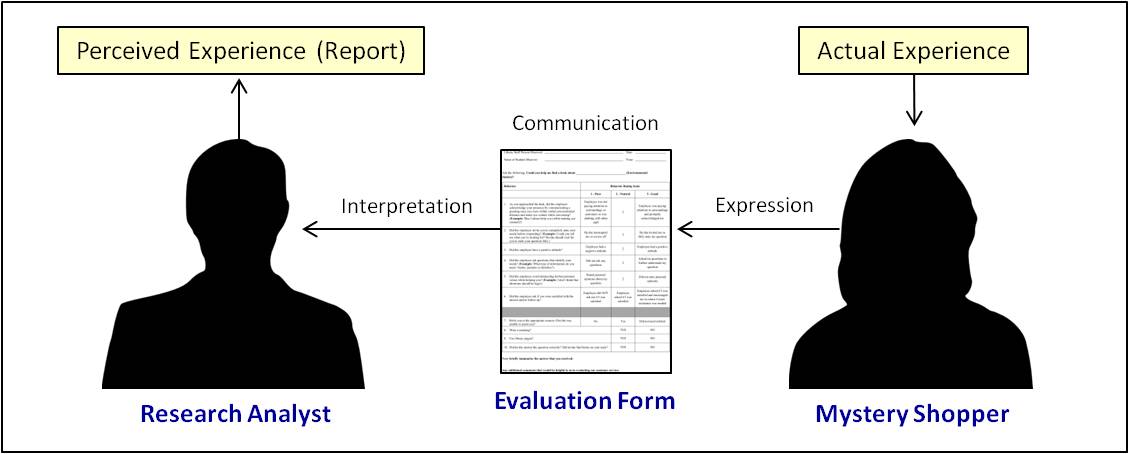
Mystery shoppers are typically representatives of fund houses who pose as ordinary investors while dealing with mutual fund distributors.

Executives at various mutual funds said 'mystery shopping' method can be an effective way to check mis-selling, which has always been a major concern for the industry.

However, the system can succeed only if it is done by independent entities and their analysis needs to be taken seriously.
"The 'mystery shoppers' method can give some kind of essence. It can help in providing you what is happening on the ground. We at Reliance Mutual Fund are already using this technique to get feedback from investors," Reliance Capital Asset Management CEO Sundeep Sikka said.

Sikka, who is also Chairman of the industry body AMFI (Association of Mutual Funds in India), said different fund houses are using different techniques in these areas.


Quantum Mutual Fund CEO Jimmy Patel too said: "Mystery shoppers can be used to reduce mis-selling in mutual funds... It can become successful provided that these are done by independent entities and we take their result very seriously."

Mis-selling mainly occurs on account of AUM (Assets Under Management) race where quantity gets predominance over quality. This is also one of the reasons why retail investors generally fight shy of investing in mutual funds, Patel said.

Explaining the benefits of the method, Baroda Pioneer AMC COO and CFO Kiran Deshpande said: "Mystery shoppers can help detect whether the recommended funds are appropriately sold to a particular investor."

"The distributor/manufacturer will not only get more watchful over their sales practices and processes, but will continuously invest in building capabilities and skills to address the needs of different investors as suited to their risk appetite," he added.

Regulator Sebi has defined mis-selling as sale of units of a mutual fund scheme by any person, directly or indirectly, by making a false or misleading statement, concealing or omitting material facts of the scheme, hiding risk factors and not taking reasonable care to ensure suitability of the scheme to the buyer.

How I Made $14,000 A Year Mystery Shopping

​Like everyone else, I have an inbox full of spam. I ignore most of it. But, one day in 2007, I decided to open an email that read: “Sign up to become a Mystery Shopper!” And, for some reason, I clicked the link.

I’d heard the pitches: “Get paid to shop!” and “Get free stuff!” But I didn’t know what was required to be a mystery shopper. So I took a chance, figuring, “What do I have to lose?”

It was more like what I had to gain—not only little perks, like free jeans, but also enough money to buy a car in cash.

How Mystery Shopping Works
When I first signed up to shop, I was 30 years old and had just started a new job as an intellectual property assistant (a specialized form of legal secretary) at a law firm. On top of my regular expenses, I owed about $45,000 from two years of law school, but I was earning just enough to afford my overpriced studio apartment on the outskirts of Boston. And that was about it.

When I got that email about mystery shopping, I was cautiously optimistic. Although I signed up to be notified about opportunities, I elected not to pay the fee (about $5 per month), which meant that I could only see the first few lines of a job posting. But that didn’t stop me: I quickly realized that, most of the time, the listings offered just enough information that I could Google the info to figure out the company name, go to their website and apply directly through them. I’d discovered a loophole!

Mystery shopping is pretty simple: Companies hire people like me to visit their stores, pretend to be an average customer and report back on the service and overall experience. For each shop that you visit, companies pay an allotted amount of money (usually $5 to $20), and since they often want you to make a purchase to get the total customer experience, they also offer to reimburse for a certain portion of the item. It sounded doable, so I signed up with 20 companies to start.

Let the Shopping (and Earning) Begin!


My first “shop” was for an electronics store. (I can’t say which one because discretion is a big part of the mystery shopping code!) The company provided a scenario: I would interact with sales associates in two different departments, ask about a plasma TV or a GPS—and see if they engaged in conversation, were helpful or only answered questions in a cursory way.

It seemed weird to pretend—in fact, it’s still a little weird sometimes. You have to get an employee name, so if the customer service person isn’t wearing a badge, you need to ask, which can be awkward. Afterward, you file reports online, which are structured as multiple choice or two-sentence fill-in-the-blank answers.

At my peak, I’d dedicate four to six hours on a Saturday going to different locations of the same coffee shop, and then spend another two hours working on the reports because you must file within 24 hours. Yes, mystery shopping is a time commitment.

And, just like that, I was hooked: I began doing jobs during my lunch hour. I could even do them on my way home from work, since I’d be walking past retail locations anyway. Slowly but surely, the money began to roll in …

The Glory Days

After taxes, health insurance and other deductions, my daily take-home pay at that time was around $100. Most shops paid me $7 to $15, so a $7 shop fee (plus the reimbursement for the meal) equaled about 10% of what I was making at my “real” job. That extra 10% a day was a big deal for me, even if all it afforded me was the chance to buy lunch a few times a week.

Once in a while, I’d have a big score. When you shop for more expensive items, like electronics, the company requires you to make the purchase and then ship the product back to them. But, during the flush days of early 2008, a sportswear company asked me to buy a $250 watch for reimbursement—and I got to keep it. (Actually, I returned it to the store, making twice the amount back.)

It was amazing how quickly that money grew: Thanks to my mystery shopping, I was able to set up automatic withdrawals each month from my checking account to an emergency fund and an account for house savings. At the height of my shopping, I was probably registered with 75 companies. I was shopping six days a week, sometimes even on Sundays—for brunch, of course!

But it was worth it: I made about $14,000 that year as a mystery shopper, and that’s not including reimbursements—just pure earnings. (For the record, I was issued a 1099 by any company that paid me more than $599 and taxed on those earnings.)

In September of 2008, I paid for a 2009 Honda Fit—in cash! There’s no way that I would have been able to do that otherwise. I love that car to this day.

Why I Scaled Back My Mystery Shopping

When the recession hit, a lot of companies that prevously relied on mystery shoppers for customer feedback switched to different methods—like customer surveys in exchange for small giveaways—so there are fewer opportunities now.

I also changed law firms, and I make roughly $20,000 more annually, so I don’t need to spend as much free time mystery shopping. But even though companies aren’t as liberal with their perks due to post-recession budget tightening, they’re paying similar rates—and I can still earn decent extra cash.

In an average month these days, I probably do 10 to 15 shops. Although it’s all about convenience now—if I know that I’m going to be headed to a certain restaurant or store, I’ll squeeze in a shop. I can’t see a reason to stop!
Source: Forbes 

If you're considering implementing a mystery shopper program for your company, or would like to join us as a mystery shopper, we'd love to have you join us! 
Learn more here by clicking HERE

Making Sense of the Data

  All of the data in the world is useless without meaningful interpretation. Our powerful software allows us to tailor and deliver information to you in the way that best fits your organization. Details of individual visits, actionable management reports, trending performance reports and dashboards delivered to your team via email, accessible through a secure web portal, or integrated and delivered to your corporate information systems is your choice. The ability for you to read and understand the data whenever you want to is paramount. Learn more about our measurement reports HERE!

If you're considering implementing a mystery shopper program for your company, or would like to join us as a mystery shopper, we'd love to have you join us! 
Learn more here by clicking HERE

The Value of Mystery Shopping...

When should you hire a mystery shopper?

Unbiased feedback can help restaurant operators up their game.

Customer service. Food quality. Wait time. Value. These are key areas of focus for every restaurant. They are the categories by which customers define success and some of the top considerations during a mystery shop; the customer experience measurement tool that delivers direct feedback on brand interactions in restaurants all across the nation, every day of the week.

SOURCE: www.restaurant-hospitality.com

Top Mistakes to Avoid When Completing a Mystery Shopping Assignment

 One easy way to improve your shop rating is to make sure you are providing a clean, concise mystery shop report every time.  Here are the most important things to avoid when completing your assignment as a mystery shopper: 
  • Copying and pasting shop information.   Each mystery shop is unique, so each mystery shop report should be unique to each individual shop.  Clients do not accept reports with copied or “canned”comments, as they expect each unique mystery shop/audit visit’s conversation to be reported individually. That’s what they are paying for. Copied or canned comments imply that the mystery shopper did not make the required observations or give them full attention. 
  •  Writing your report in ALL CAPITAL letters.  Mystery shopper businesses cannot submit a report to  clients if it is not written using correct sentence case, using both capital and lower case letters.  
  • Not using a spell check.  Use caution; spell check will not catch words that are spelled correctly but used incorrectly.  For example, their, they’re and there are all spelled correctly and sound the same, but have very different meanings.
  • One word answers.  If there is a text box after a question, be sure to answer in a complete sentence. 
  • Avoiding the question.  Be sure you are answering the question asked.  Make sure you do not get off topic.  
  • Not submitting your validation documents on time or legibly.  Mystery shop reports without the proper validation documents cannot be used.  Be sure to submit a clean copy of these documents, blurry photos cannot be accepted. 
Original Article via Confero

If you're considering implementing a mystery shopper program for your company, or would like to join us as a mystery shopper, we'd love to have you join us! 
Learn more here by clicking HERE

What Is An On-Site Mystery Shop?

On-site mystery shopping is one of the most traditional and effective methods for gathering feed-back on your guests’ experience. Through the use of on-site mystery shoppers, you can gain in-valuable insight into how your customers feel about doing business with your company as well as their overall level of satisfaction of the customer service they receive from your employees, and how likely they are to do business with you in the future.

Unlike customer surveys, you can direct the shoppers on what departments they should visit, what items they should buy, how they should behave, what questions they should ask and what items they should inquire about.

As a portion of our training and shopper preparation for each assignment, we provide the mystery shoppers with what the guest satisfaction experience should look like in an ideal situation based on your non-negotiable standards for service so the actual experience can be measured against those standards.

Additionally, we can require the shoppers to take photos of specific items, receipts or signage so you can see the actual conditions during their visit rather than just reading about them. This feature allows you to validate the information and provide visual feedback to your employees.

Like all other services, Mystery Shopper Services will work with you to custom design a program around your specific needs and unique standards for doing business to ensure the information you receive back is accurate, reflective, and useful for making changes and implementing training.

If you're considering implementing a mystery shopper program for your company, or would like to join us as a mystery shopper, we'd love to have you join us!
Learn more here by clicking HERE!

Mystery Shopping Demystified


 As a stay-at-home mom, Deva Roberts was "looking for a way to be able to bring home an income while still being able to care for my children. I had just found out I was pregnant with my fourth child and knew we would not be able to easily survive on the modest income my husband brought home. Two children in diapers is not cheap." Roberts has always been interested in human nature and is a natural born "people watcher." She pays close attention to detail and as a mystery shopper and customer service auditor she gets paid to do something she enjoys.


Mystery shopping companies pay shoppers an average of $10 to $30 for completing an assignment. Sometimes they are reimbursed for services, such as oil changes or meals at restaurants. It's a good opportunity for stay-at-home moms like Roberts; her children are 11, 8 and 3 years old with the youngest at 22 months old. Many assignments allow you to bring your children in tow. After all, the average customer has children too. Shoppers need to use caution when applying to mystery shopping companies. "One rule of thumb is never give money to a website that says you need to pay in order to get the names of mystery shopping companies because they are only out to steal from you," Roberts says. "If you stick with companies that belong to the Mystery Shopping Providers Association, you are in good hands as they will not allow a mystery shopping company to be a member if they are not up to their standard."


When Roberts started out, she says the internet was her best friend when searching for information on mystery shopping. She did a Google search for "work from home" opportunities and stumbled across mystery shopping. "I was one of the lucky ones who found legitimate sites for mystery shopping for free," she adds. The more companies a shopper signs up with, the more likely they are to get regular assignments.

"There is no real 'investment' needed at first," Roberts says, "other than to have a computer with online access and a printer." However, you do usually start out using your own money for the mystery shop assignments themselves. Roberts explains you either request or get an assignment with a company you are signed up with. For example, there are clothing shops where you're required to make a purchase and you receive a reimbursement, but you won't get reimbursed for at least one month later. Your payment for the assignment and reimbursements can take anywhere from one to three months, depending on the mystery shopping company for whom the work was performed. Roberts' time is divided between working in the field and filling out reports that have to be submitted before the company she has completed the assignment for will pay her.


After the visit, the mystery shopper goes online to transmit the report to the mystery shopping company, who then edits the report and verifies it for authenticity. Once the editors give the report the final review, results are available online to the managers. Reports are often delivered to the company within 24 hours of the evaluation. Since everything is web-based, businesses are able to view all their reports in one place.

As a stay-at-home mom, Roberts gets paid up to $1,000 a month while she works part-time. She quickly discovered that networking with others in her business and perfecting observational skills is a must if you want to be good at your craft.

This article was excerpted from Weekend Entrepreneur: 101 Great Ways to Earn Extra Cash, available from Entrepreneur Press.

If you're considering implementing a mystery shopper program for your company, or would like to join us as a mystery shopper, we'd love to have you join us! 
Learn more here by clicking HERE

Notes on Mystery Shopping

Many of you may not be familiar with what mystery shopping really is.
 
Mystery shopping is a job where a company pays a qualified agent to visit a place of business and provide feedback on things such as how clean the store was, quality of the food, service, ambiance or how well the employees interacted with them.The purpose of mystery shopping is for the guest to get as much information as they can and be a good observer. They will include and note important factors in which the business can greatly benefit from knowing, offering a detailed report.

We can help you become a mystery shoppper or set up your mystery shopping strategy!
  Click here to learn more!

Becoming a Successful Mystery Shopper

Mystery shoppers range in age, gender, ethnic and economic backgrounds. The key to being a successful mystery shopper and receiving continuous assignments is:

  • Only accepting assignments you are comfortable performing
  • Never requesting and accepting assignments you are not 100% confident that you can complete on time
  • You should generally enjoy interacting with people
  • Checking the job board regularly for available assignments
  • Be setup with PayPal to receive payment
  • Always keep your profile up-to-date
  • Stay in communication with the project managers and editing team
  • You should be able to remember small details and have excellent observation skills
  • Have good written and verbal communication skills
  • Have a computer and the ability to check email often
  • Have reliable internet access and transportation
  • Have access to a scanner or digital camera
If you're considering implementing a mystery shopper program for your company, or would like to join us as a mystery shopper, we'd love to have you join us! 
Learn more here by clicking HERE

Mystery Shopper Services Client Reporting

The Keys to Providing Outstanding Customer Service!

 
Knowing what you can do to EXCEED their expectations.

Finding out how your customers would like to be served.

Discovering who your typical customers are.

If you're considering implementing a mystery shopper program for your company, or would like to join us as a mystery shopper, we'd love to have you join us! 
Learn more here by clicking HERE!